
What We Mean by Belonging
A slower reflection on why Ador asks for nothing in return, and why welcome must come before becoming.
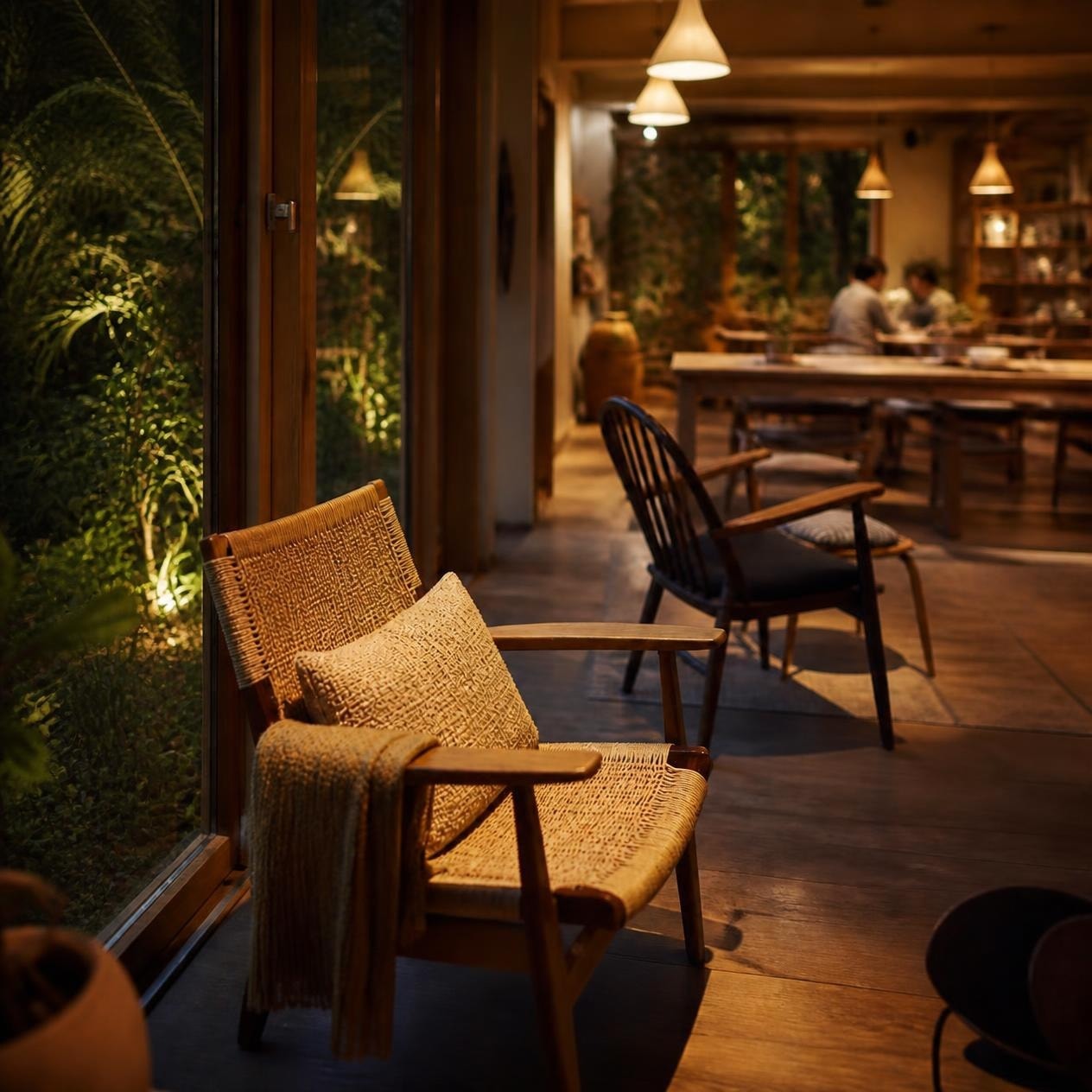
There’s a particular kind of silence that often happens when a young person walks into a room and realizes, slowly, that no one is going to ask them anything.
No “so what do you want to be.” No “have you thought about your future.” No worksheet, no icebreaker, no gentle test disguised as a question. Just a chair, a place to sit if they want it, and the option of nothing at all.
We’ve watched that silence happen a few times now, in early visits to the site where Ador—our name for this space—will eventually be. Ador is an Assamese word, borrowed originally from Sanskrit, that doesn’t translate cleanly into English in one go. It means love and affection, but also respect, honour, and the specific feeling of being welcomed with care rather than merely permitted entry.
We didn’t choose it because it sounded nice. We chose it because it was already describing, more precisely than we could, the thing we are trying to build a room around.
It doesn’t look like relief right away, that first sit. It looks more like suspicion: like the person is waiting for the catch. Most spaces built for young people have one, even the well-meaning ones. Sit here, and eventually you will be asked to perform your gratitude, your progress, your potential. Somewhere along the way, being present quietly turned into a thing you have to earn.
We don’t want to build another one of those.
The order matters
It would be easy to describe Ador as a lead-in to the “real” programming: a comfortable room you pass through on your way to the loom, or the farm, or whatever skill is actually being taught that day. That’s not quite it, and for us, this distinction matters more than it might seem.
Physically, Ador is not entirely separate. It shares its footprint with the Studio rather than sitting off in its own building at a polite distance. We went back and forth on that. It would have been easier, in some ways, to keep the unconditional space and the skill-building space apart—cleaner on a floor plan, easier to explain.
But keeping them overlapping was the more honest choice. Belonging isn’t supposed to be a waiting room you sit in before the real thing starts elsewhere. It is meant to be close enough to reach out and touch, some days literally, so that a person can drift from sitting quietly to picking up a shuttle and back again without crossing any kind of threshold.
Belonging, in our model, isn’t the reward at the end of a young person doing something impressive. It is the ground they are standing on before they do anything at all.
Fields and the Studio ask things of the people who come through them: attention, patience, hands willing to get dirty, or fingers willing to fumble a first weave. That is how it is supposed to be. Craft asks things of everyone. But it can only ask fairly if the person arriving already knows, without needing to be told twice, that their welcome is not conditional on how well they do it.
So Ador comes first. Not because comfort is more important than skill, but because skill-building works differently on a person who already feels steady than on one who is still auditioning for the right to be there.
What “unconditional” actually costs
I want to be honest that this is a harder space to build than it may sound. A programme with a curriculum has a shape you can point to, measure, and defend to a funder. A room that simply lets someone sit and asks nothing back is, on paper, difficult to justify.
What is the outcome? What is the metric?
We do not have a tidy answer to that yet, and we are wary of inventing one just to make the space legible on a spreadsheet.
What we do have is a working belief, borrowed from people who have thought about this longer than we have: that self-worth does not scale up from achievement; it scales down from safety. You do not get a young person to trust their own instincts by first making them prove those instincts are worth trusting. You get there by giving them enough unremarkable, undemanding time in a space that is not grading them, until trusting themselves starts to feel less like a risk.
The firefly does not perform its light for anyone. It is simply there, most visible in the company of others doing the same. That is the image we keep returning to when we are tempted to add a little more structure to Ador than it needs—one more activity, one more prompt, one more thing to fill the quiet with.
We are working on the answer being to take something out, not to add something in.
What this looks like, eventually
In practice, we imagine Ador as something closer to a good café than a classroom, where coffee and tea are available without ceremony and with no obligation attached to enjoying them.
What we have spent the most time thinking through, actually, is the seating, because seating is where “unconditional” either becomes real or stays a nice idea. There is room to sit alone without it reading as isolation: a chair angled toward a window rather than toward a wall, close enough to the rest of the room to still feel part of it.
There are smaller arrangements for two or three, for the kind of conversation that does not want an audience. And there is one large table, easily big enough for ten or twelve, for whoever wants to be in the middle of things that day—talking, playing a game, or watching someone else’s project take shape across the wood.
None of those are better than the others. Nobody has to justify which one they choose, or move from one to another because they have stayed alone too long by someone else’s clock. A person can come in and know, from the shape of the room alone, that solitude and company are both just seating choices here, not judgments.
Maybe they will pause at the Studio that same afternoon, since it shares part of the same space. Maybe they will not, that day or the next. That has to be genuinely fine, or the unconditional part is not real.
A space that stays alive
We are still developing this space, and it may never be really finished. We envision Ador as a living space that keeps rearranging itself: a chair pulled somewhere new because someone found a better patch of afternoon light; the big table pushed aside some evenings to make room for a game none of us had thought of yet; a corner claimed and reclaimed for purposes we did not design it for.
That kind of shifting is the space becoming alive with the people who actually sit in it and with whatever they bring into it, rather than following a floor plan we finalized before anyone arrived.
To be honest, this is still more intention than physical space. But we wanted to share it now, before this promise of an organically growing, living space is tested by the practical pressures that come with actually running such a place: funding cycles, footfall numbers, and the reasonable instinct to prove a room is being “used.”
Belonging before becoming is a nice line. The harder work is making sure it survives contact with a spreadsheet.
This post is part of Threads, filed under After dark: reflections and slower writing from the people building Jonaki. If you are thinking about similar questions in your own work, we would like to hear from you.
Explore Topics
Written by
Jonaki Learning and Development Foundation
Sharing insights and stories.